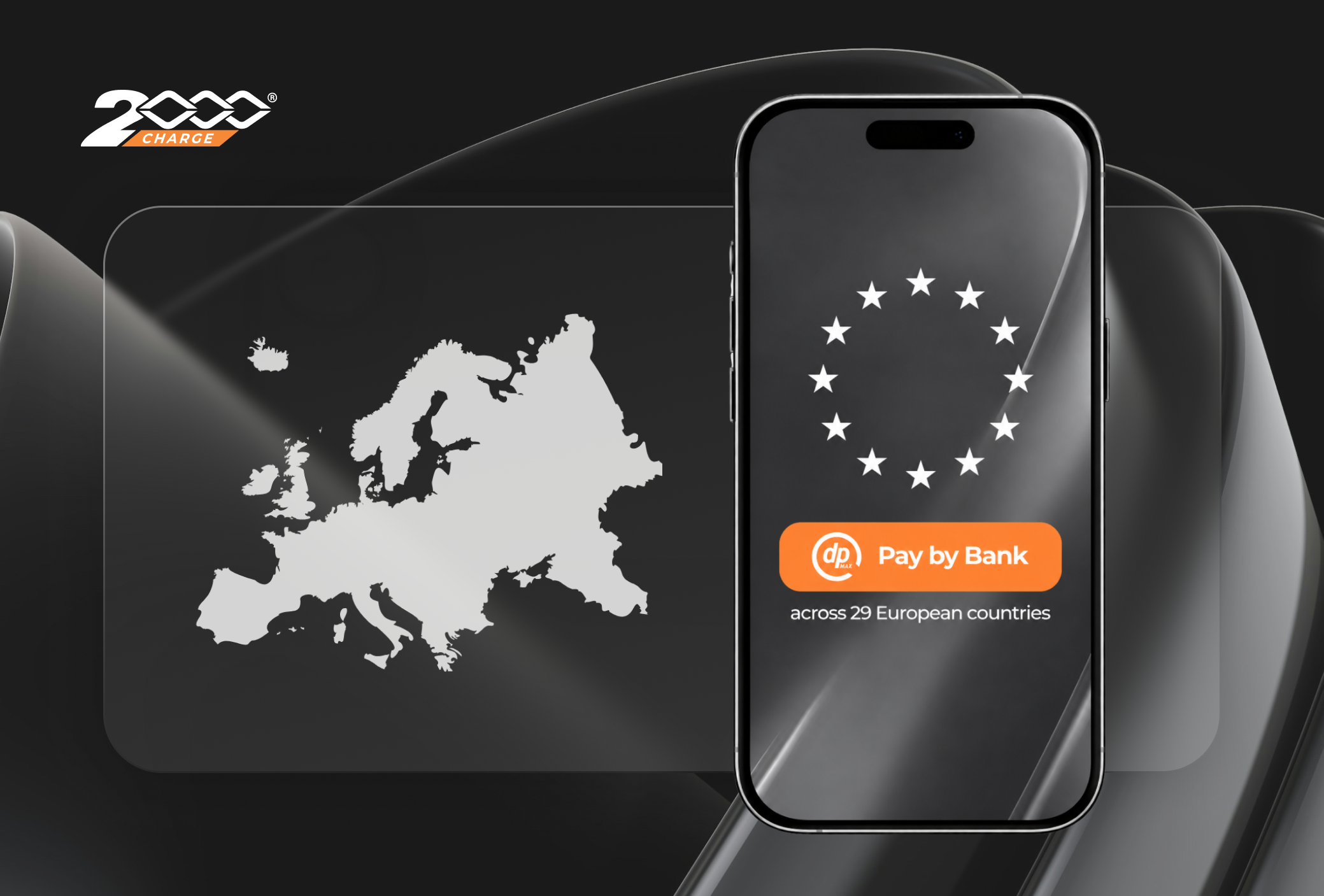
Pay by Bank Is Becoming Part of the Modern European Checkout

Heading

Pay by Bank Is Becoming Part of the Modern European Checkout
The way customers pay online continues to evolve.
Credit cards remain an important part of e-commerce, but they are no longer the only payment option merchants need to consider.
Across Europe, customers are accustomed to different ways of paying, from cards and local payment methods to direct bank-based payments.
For merchants selling into European markets, offering Pay by Bank is becoming an important part of building a checkout that reflects how customers want to pay.
What Is Pay by Bank?
Pay by Bank allows customers to make online payments directly from their bank accounts without entering credit card details.
Instead of providing card information at checkout, customers select their bank and authorize the payment through their own banking environment.
With DPMax by 2000Charge, customers can select their bank or enter their IBAN before being redirected to their bank to authorize the transaction.
The experience is straightforward: customers pay through a banking environment they already use, while merchants receive a bank-based payment option they can offer directly at checkout.
Pay by Bank isn't intended to replace cards. It gives customers another way to pay, based on their preferences.
Why Pay by Bank Matters in Europe
Europe isn't one uniform payment market.
Payment habits differ across countries, and customers often have established preferences for how they complete online purchases.
In the Netherlands, bank-based payments have long been part of everyday e-commerce. In Belgium, Bancontact is widely recognized, while customers in Poland are familiar with methods such as BLIK and Przelewy24.
These preferences highlight an important point: payment localization is just as relevant as language, pricing, and currency.
For merchants expanding across Europe, offering Pay by Bank alongside cards and relevant local payment methods creates a checkout that better reflects the markets they serve.
Rather than expecting every customer to use the same payment method, merchants can provide options that feel familiar and appropriate.
A Payment Option Designed Around the Customer
The checkout experience is one of the final interactions a customer has before completing a purchase.
At this stage, customers should be able to choose a payment method they're comfortable using.
Pay by Bank offers a different experience from traditional card payments.
Customers don't need to enter card numbers or expiration dates. Instead, they authorize payments directly through their banking environment.
For customers who prefer bank-based payments, this creates a familiar way to complete an online purchase.
For merchants, it provides another payment option that can be offered from the beginning of checkout, rather than only when another method is unavailable.
The goal isn't simply to offer more payment methods. It's to offer the right payment methods for the customers you're trying to reach.
Making Pay by Bank Accessible Across Europe
Offering Pay by Bank in one market is one thing. Making it available across multiple European countries introduces additional complexity.
Europe's banking landscape includes thousands of banks, different technical connections, and multiple Open Banking providers.
Managing these connections individually can require significant technical resources.
This is where Open Banking orchestration becomes important.
DPMax by 2000Charge connects multiple Open Banking providers through a single platform, giving merchants one integration to offer Pay by Bank across supported European markets.
Smart routing helps select the appropriate provider connection for each transaction, while built-in redundancy allows transactions to be routed through another available provider if one connection encounters an issue.
For banks without a supported Open Banking connection, DPMax can also provide a standard bank-transfer alternative through DirectPay EU, with a different confirmation process from direct Open Banking payments.
The result is a more accessible way for merchants to offer bank-based payments without managing separate Open Banking integrations themselves.
Pay by Bank Belongs in the Payment Mix
A modern European checkout doesn't need to rely on one payment method.
Cards, Pay by Bank, and relevant local payment options can each play a role in creating a checkout experience that reflects customer preferences.
For merchants, the opportunity is to make Pay by Bank a visible, accessible payment choice alongside the methods customers already know.
And as businesses expand into new European markets, having the right payment infrastructure in place becomes increasingly important.
DPMax makes it easier to offer Pay by Bank across Europe through one integration, combining broad bank coverage, smart routing, and built-in redundancy.
Pay by Bank isn't just an alternative. It's a payment option worth offering from the start.
Bring Pay by Bank to Your Checkout with DPMax
Your European customers already use their banks every day. Give them the option to pay through them, too.
DPMax by 2000Charge simplifies European Open Banking through one integration, connecting merchants to thousands of banks across supported markets.

Keep Exploring
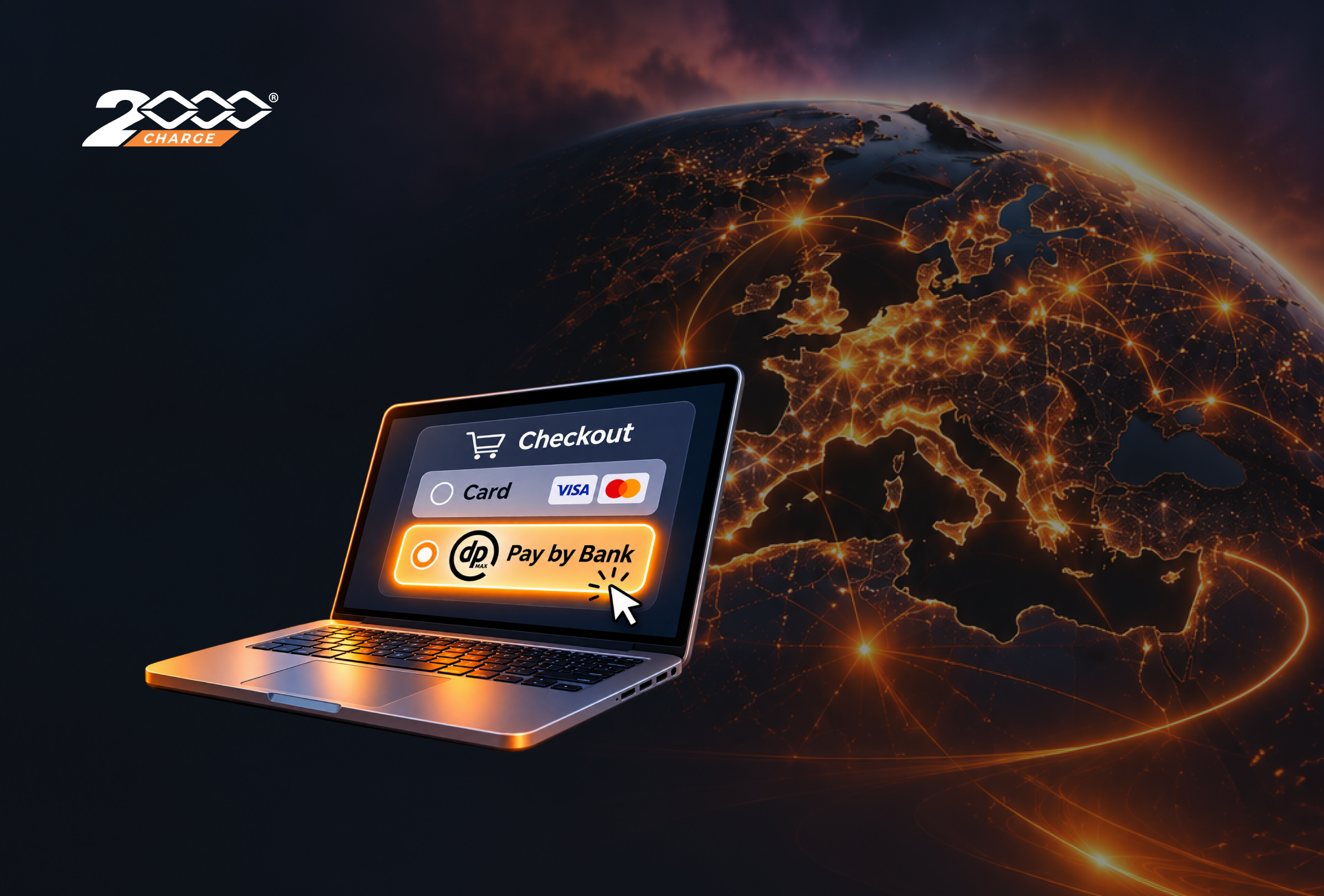
Why European Checkouts Need More Than Cards
Discover why European checkouts need more than cards and how DPMax helps merchants offer Pay by Bank with broad bank coverage, smart routing, and one integration.
The Hidden Revenue Leak in European SaaS Payments
The Hidden Revenue Leak in European SaaS Payments
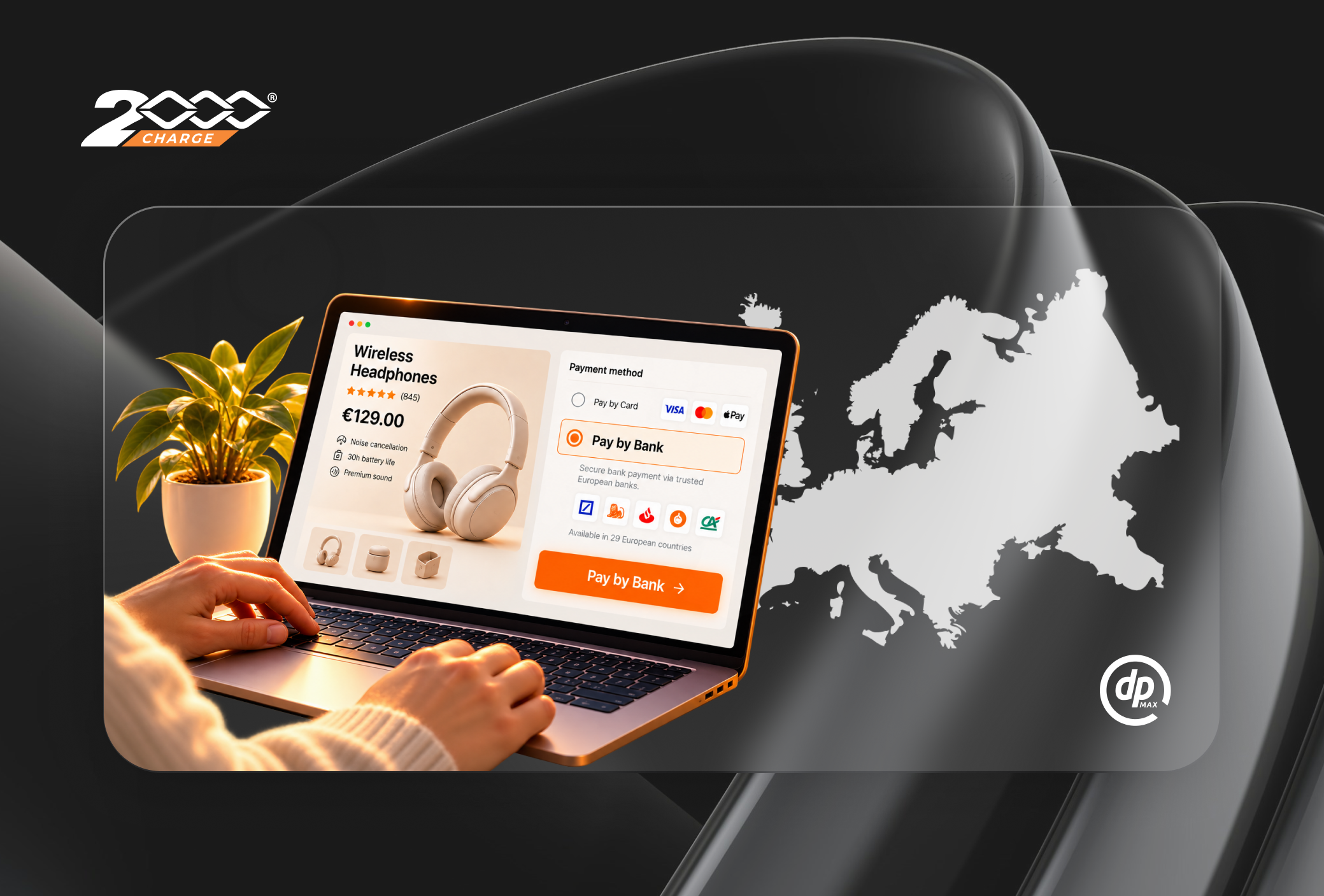
Why One Open Banking Provider May Not Be Enough for European Coverage
Why One Open Banking Provider May Not Be Enough for European Coverage
Ready to increase your revenue with local payment methods?
There are a lot more payment methods customers from all over the world feel more comfortable to use and trust much more than credit cards.